


The World Cup is in full swing, and so I’m once again swept up in this rare spectacle that brings the whole world together. This year in particular, we see people from disparate cultures bonding and finding commonality, from Algerians in Kansas to Korean and Japanese fans in Mexico. And so of course I’m also thinking about my favorite Japanese restaurant in Oaxaca, Sanzin. It is, on the surface, a casual lunch counter. But a meal there turns out to be much, much more than that.
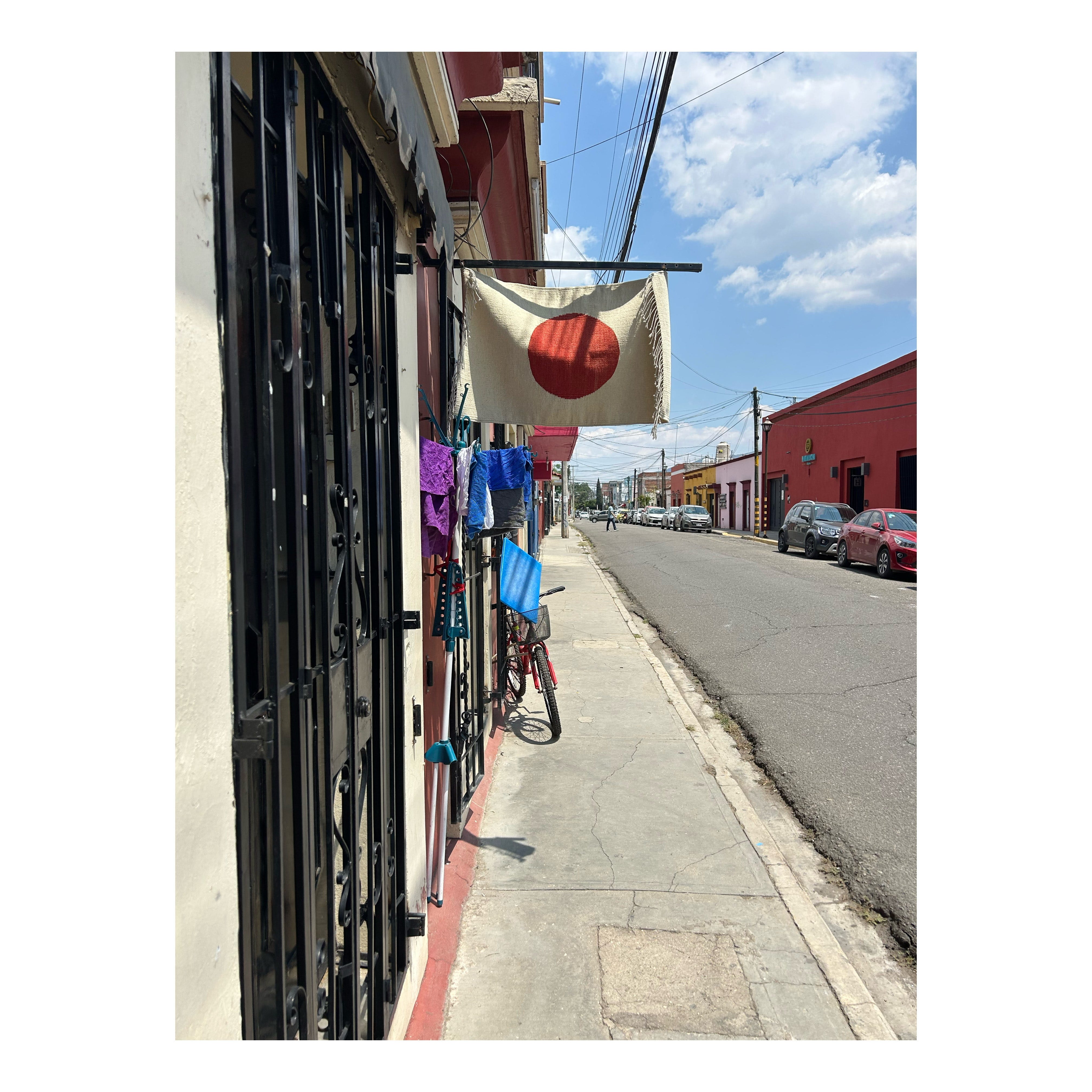
There are not many destination restaurants that you’d walk right by without noticing. There are fewer still that are walk-in only, with the amount of walk-ins being far fewer than you’d expect and far below what the establishment deserves. Sanzin, visible only from a Japanese flag hanging streetside in a tucked away corner of Oaxaca de Juarez, is both of these things. It is also the kind of place chefs whisper about to each other and go eat at on their off-day–which is exactly the kind of place you’d probably like to eat at, too.
I wrote this time last year, after some time traversing around Western Europe, about the complex and spectacular modern European food scene in which chefs with diasporic ties to other continents blend their roots with their current homes on the plate. A lunch at the Filipino-French Le Servan in Paris last June, for example, is still my favorite meal in recent memory. The food there and in other similar restaurants across France right now speaks to something beyond our outdated models of Fusion cuisine; it is not, in other words, just taking and adapting flavors from one exotic place and fitting them into the context of the dominant culture; what it is, rather, is having two distinct cultures in nuanced conversation in ways that both celebrate similarities and forge something new altogether.
Sanzin is this type of restaurant, too, Japanese technique meeting Mexican ingredients in a singular way. I say singular here because if you asked AI to create some menu concepts that fused these two cuisines you’d get nowhere close to the level of cooking and care found here. The result probably wouldn’t be a casual lunch counter either, or casual at least in appearance, until at the arrival of the first dish you realize you’re in for something expansive. An opening dish on the chef’s omakase lunch offering (a must) was a small cup of pea soup: peas cooked and blended into a dashi made from local veg and pork, served in a small Oaxacan mug. Those that have spent time in Japan will recognize this as a zensai, the small dish offered as the meal begins to awaken the palate. But this one, featuring Oaxacan flavors and served in a Oaxacan mug, announces that this meal will be deeply rooted in place.
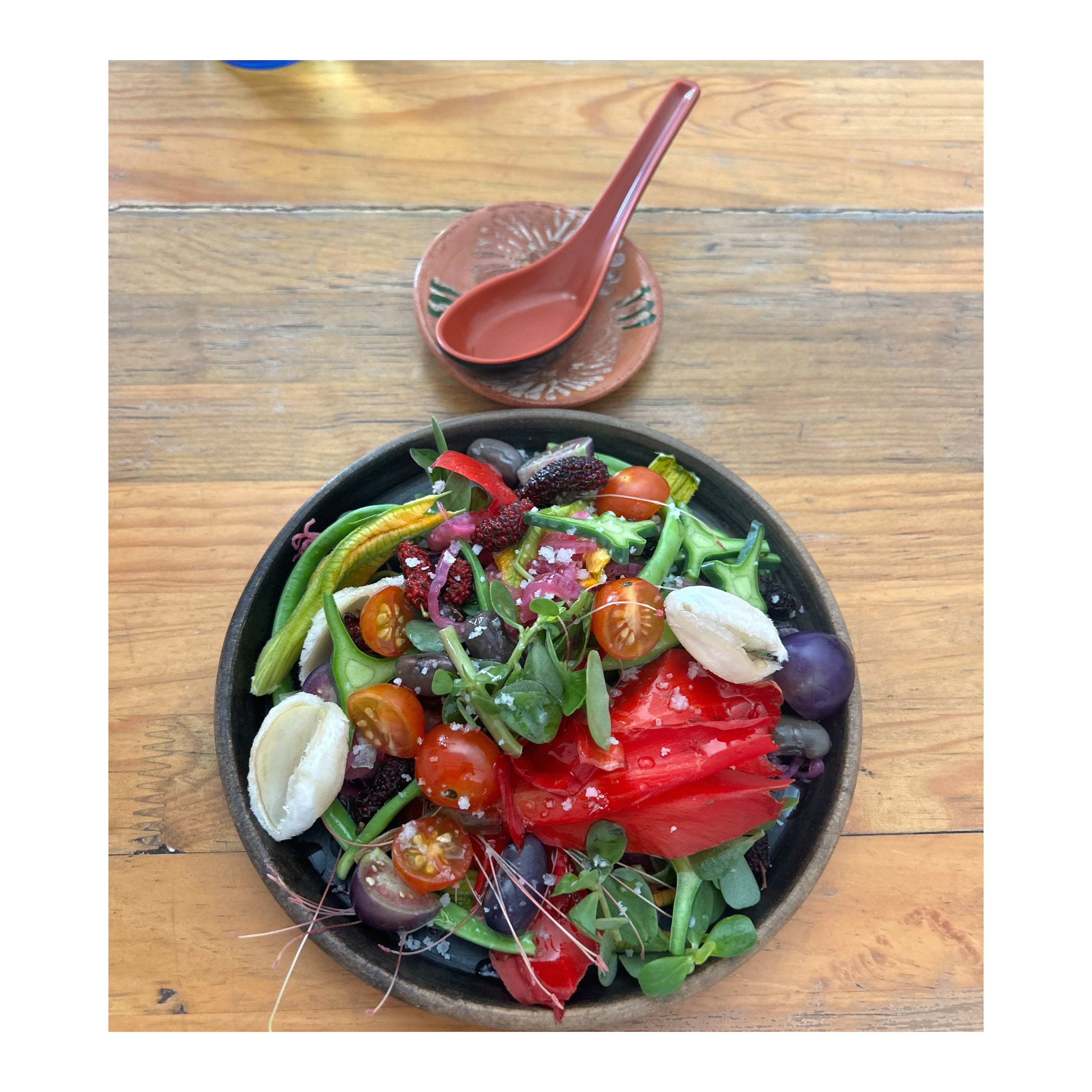
A friend messaged me after I posted some photos from the meal. “This guy is a legend!,” he said, and went on to describe how the chef had cooked for years in fine dining establishments in Mexico City before moving here and opening his own place. And the chef himself told me–our conversations flitting between English, Spanish, and my very broken Japanese–that he had cooked in Japan for years before that. What had brought him here, to Mexico City and now Oaxaca? It was, more or less, a love story: not with any one person, but more broadly with the people, the culture, and the food.
What binds these two faraway places together–and really many places still connected to ancestral roots–is a deep reverence for the land and raw ingredients around them. In Japan that might look like shrines dotting the countryside, each one unique and very much embedded into its local surroundings, and it also might look like hyperregional pickles and fermentation. In Oaxaca, small towns dot the arid hills, most of them carrying on age-old traditions of ceramics, textiles, or foodways sourced from the earth around them.
And both cultures, too, have long been adapting and transforming their cuisines to outsiders. Japan’s ramen culture is based of the soups of the Chinese immigrants who settled in port cities, and in the trying post-war era many American military staples like dried noodles and canned foods found their way into Japanese home cooking. Rice came from Asia to Mexico and has become a staple of the diet, while Arabic influences created Al Pastor tacos in the style of gyro meat cooked on the spinning top.
Which is to say: whatever authenticity we perscribe to these cuisines is actually quite hard to find when you begin to scour it’s staple foods and long standing traditions. Rather, it seems to be more evident in the continual adaptation process itself.
The chef who had told me to go to Sanzin is the fermentation guru at Labo Fermento, an amazing project in Oaxaca that makes misos, shoyus, and more from local ingredients like black beans, blue corn, and chiles. At Sanzin itself, this sort of approach is reversed, as the chef makes Japanese food, more or less, with Oaxacan ingredients. Each week, he goes to his favorite farmers market in a suburb of the city, where he’s able to find the highest quality fish, vegetables, and foraged ingredients.
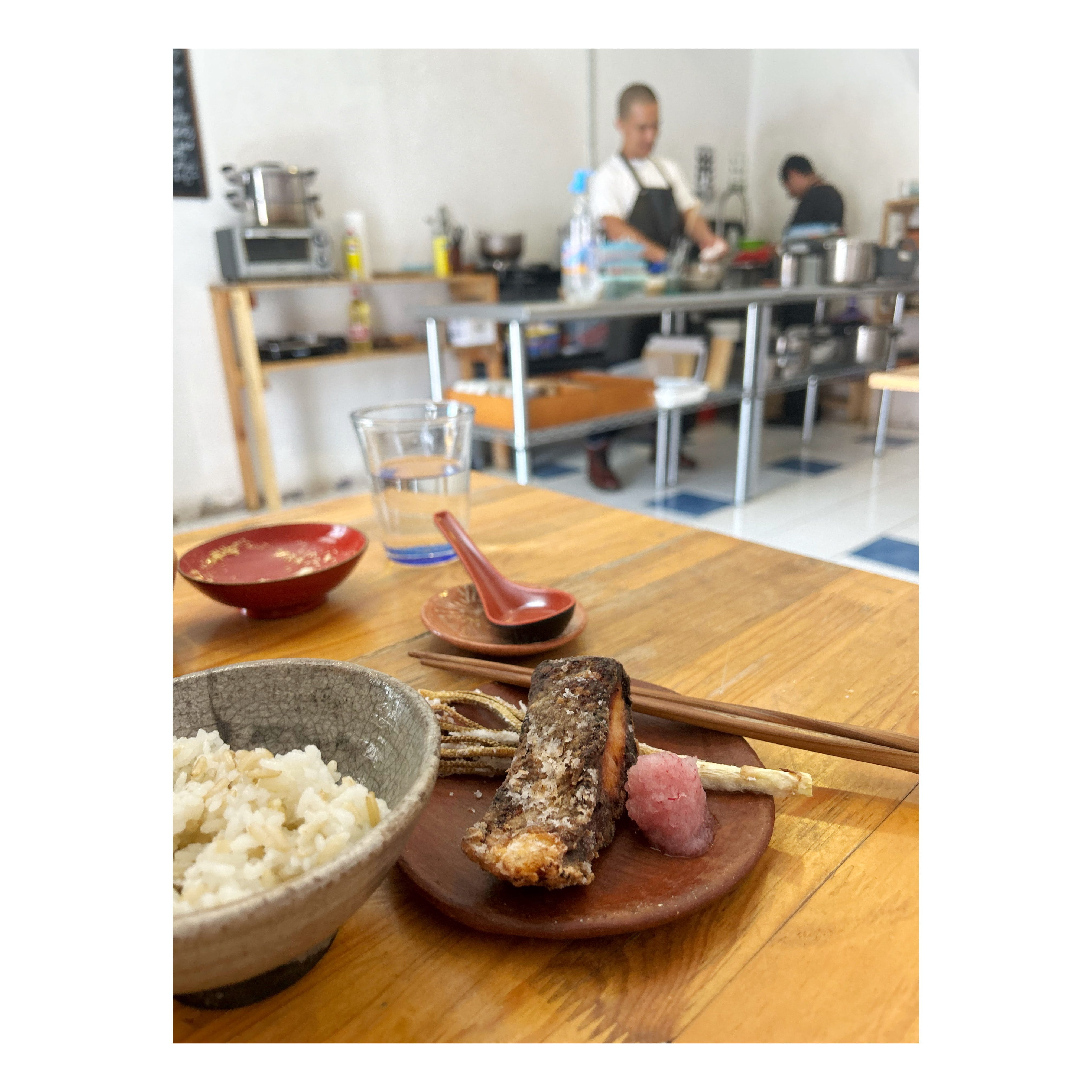
A favorite dish of mine at Sanzin was a grilled skewer of semi-dried beef (locally called Tasajo) and avocado, with something the chef described to me as a local horseradish on top, brought out the best of both cuisines. Following this was a cured and grilled fish dish with grated radish and a tempura of a foraged Oaxacan vegetable that reminded me so much of the types of spring tempuras of Taronome or Udo I’ve seen in rural Japan, where ingredients we in the West might deem as too medicinal get rounded out in the frying process and act as natural palate cleansers when paired with hearty meat or fish.
I told him as much, and he smiled, telling me that was the inspiration behind it. This is the kind of post-fusion cuisine that’s graceful and effortless, no dish feeling out of place precisely because each one feels distinctly of that place.
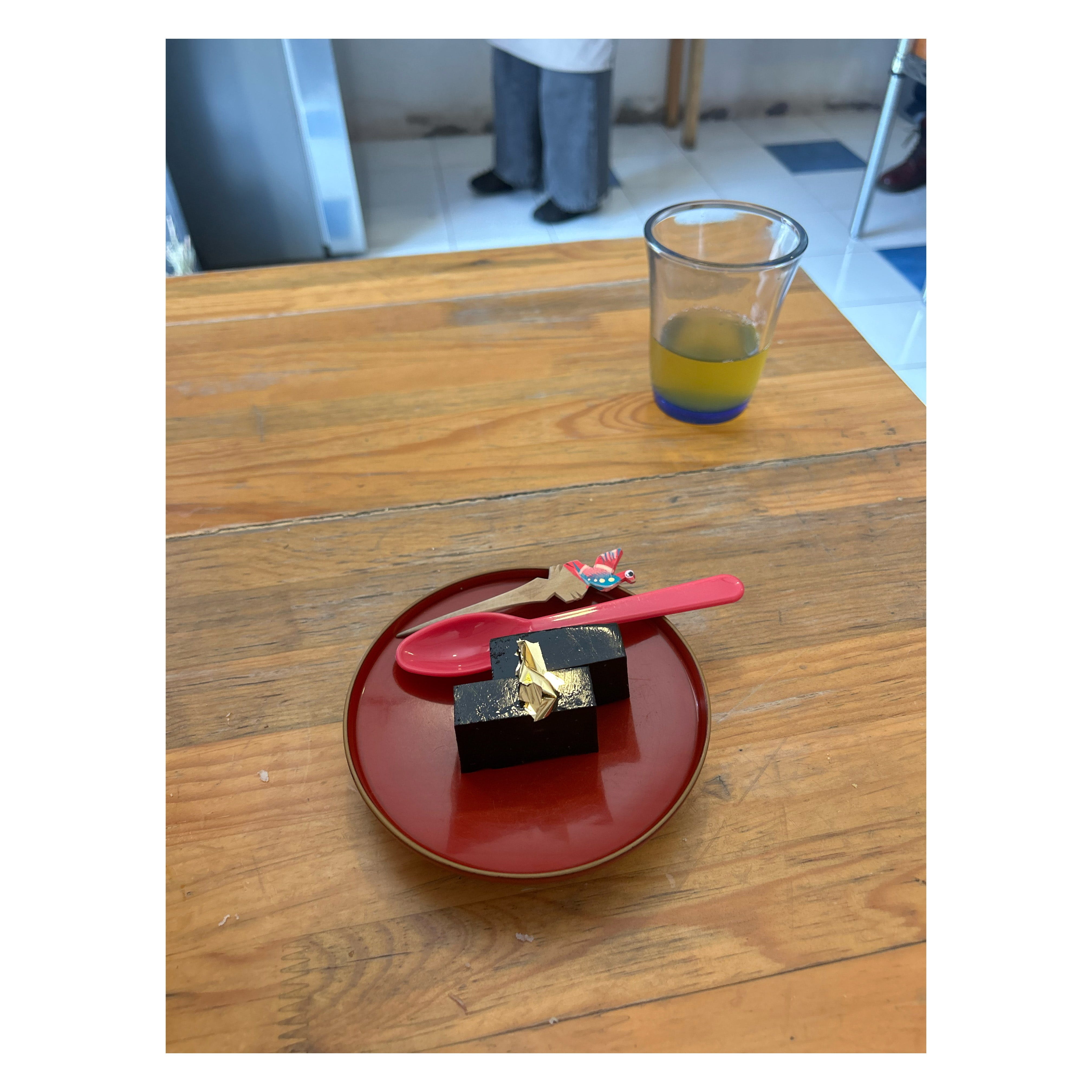
By the time dessert came about, a take on the Japanese bean paste jelly called yokan, I was in a state of bliss. This yokan was made from a Oaxacan fruit called zapote negro, one of my favorites but an odd one texturally, often better appreciated by tourists in a sorbets than on its own. But here it made perfect sense, the slight graininess lending some intrigue to the yokan much like fig adds some texture to jams. And yet, there was something more going on I couldn’t quite place. Something else felt familiar, nostalgic even. It hit me only in the aftertaste, as it lingered on the palate: hoshigaki! Zapote, especially in this format, had that beloved profile found in dried persimmon, an iconic Japanese preparation that involves hanging persimmons in the winter and massaging them daily as they slowly break down and turn chewy and sweet. Here was a Japanese dessert, made with Oaxacan fruit, that gave rise to a third thing amidst that confluence.
There’s something brimming with hope and wisdom about these restaurants beginning to dot the globe, in this global age in which we have access to knowledge of cuisines the world over. They speak to the best of both cuisines they draw from while bringing about a new thing altogether, and what’s remarkable about that to me is that this thing is new and ancient all at once. They are deeply steeped in place, in the way cuisines were before globalization: finding the smartest, most delicious ways to use the ingredients at hand. That means preservation and fermentation; it means a balanced diet; it often involves foraging, and always involves being steeped in the community around you. And, while Oaxaca has no shortage of its own incredible chefs preserving age-old crafts and innovating new ones, there’s a place at the table for outsiders to showcase their own traditions as well.
Fascinating!!