


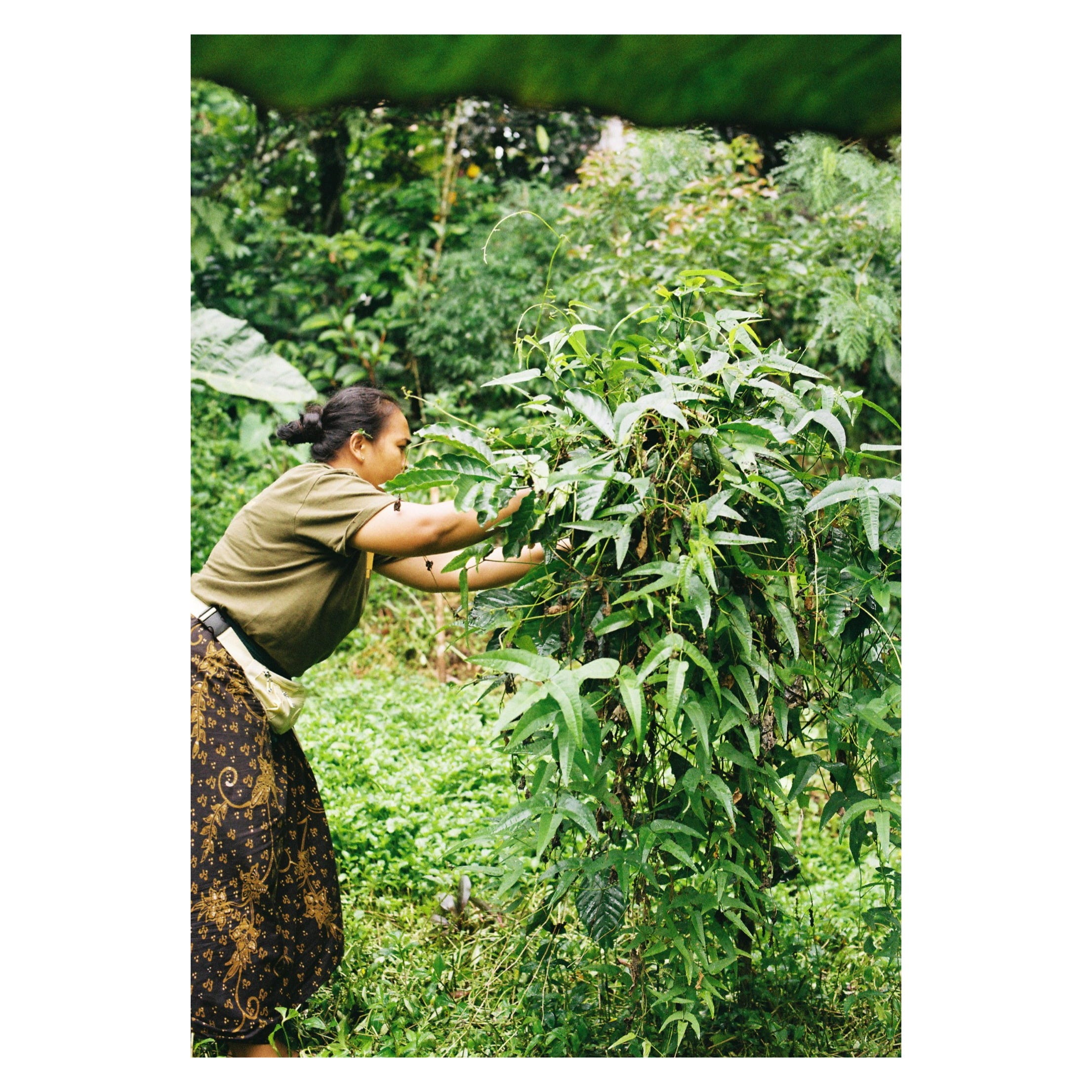
“This plant here, growing through the cracks of the wall–that’s edible,” Made Masak tells us as we start our descent into the forest. “The roots force their way through the spaces between the stones, and when consumed it helps break up kidney stones in the body.” I remember learning a similar thing in herbalism school–that plants tend to communicate their medicinal benefits through taste and smell and even through appearance–but I would not have guessed that these tiny green leaves pushing out from the wall would be edible. Any plant identification skills I’ve learned in the temperate forests and prairies back home hardly translate here in the Balinese jungle. Made Masak, however, seems to be able to identify every plant and its benefits around her. And we’re not even in the food forest yet.
Bali, Indonesia, is relatively quiet this winter. Locals tell me varying hypotheses as to why. A taxi driver thinks all the media coverage of the floods–which were significant, but haven’t affected the main tourist zones–has kept potential visitors at bay. Others say Westerners have simply moved on, to Thailand and Sri Lanka and elsewhere, seeking the same wellness of healthy eating and yoga and mindfulness they had been after here. This comes as a relief to some, who are keenly aware of how Bali has been overrun by tourism in recent years, with new resorts and Airbnbs and coworking spaces and gyms and health food restaurants now dominating the infrastructure on the southern part of the island. Tourism consumes over half of the area’s freshwater, which has both depleted groundwater and led to major plastic pollution in its oceans due to discarded bottles and other waste. Farmers struggle to grow crops amidst water shortages and many have turned to short term solutions–pesticides and fertilizers–to try to keep pace with the tourism industry’s growing demand for food.
For others, like our taxi drivers over the course of the trip, it’s more complicated. They were all eager–more than eager–to drive us, to wait around for hours during our food tours, to tell us they’d be happy to drive us the following day as well. Their business, booming only a couple of years ago with few signs of slowing down, had suddenly shored up.
Bali exists as something of a cautionary tale now, a modern colonization story of what happens when the discontented West turns its eager gaze on something new and shiny: in seeking their own individual wellness here, foreigners have stripped a culture and its people of much of its own. Some Bali locals I talked to considered the problem of Bali to be too far gone, no longer able to be rewritten or overcome. But those same people also insisted I go observe and learn from some of the people working tirelessly to preserve and protect the island’s fragile foodways. There is still so, so much, they seemed to be saying, that’s worth fighting for.
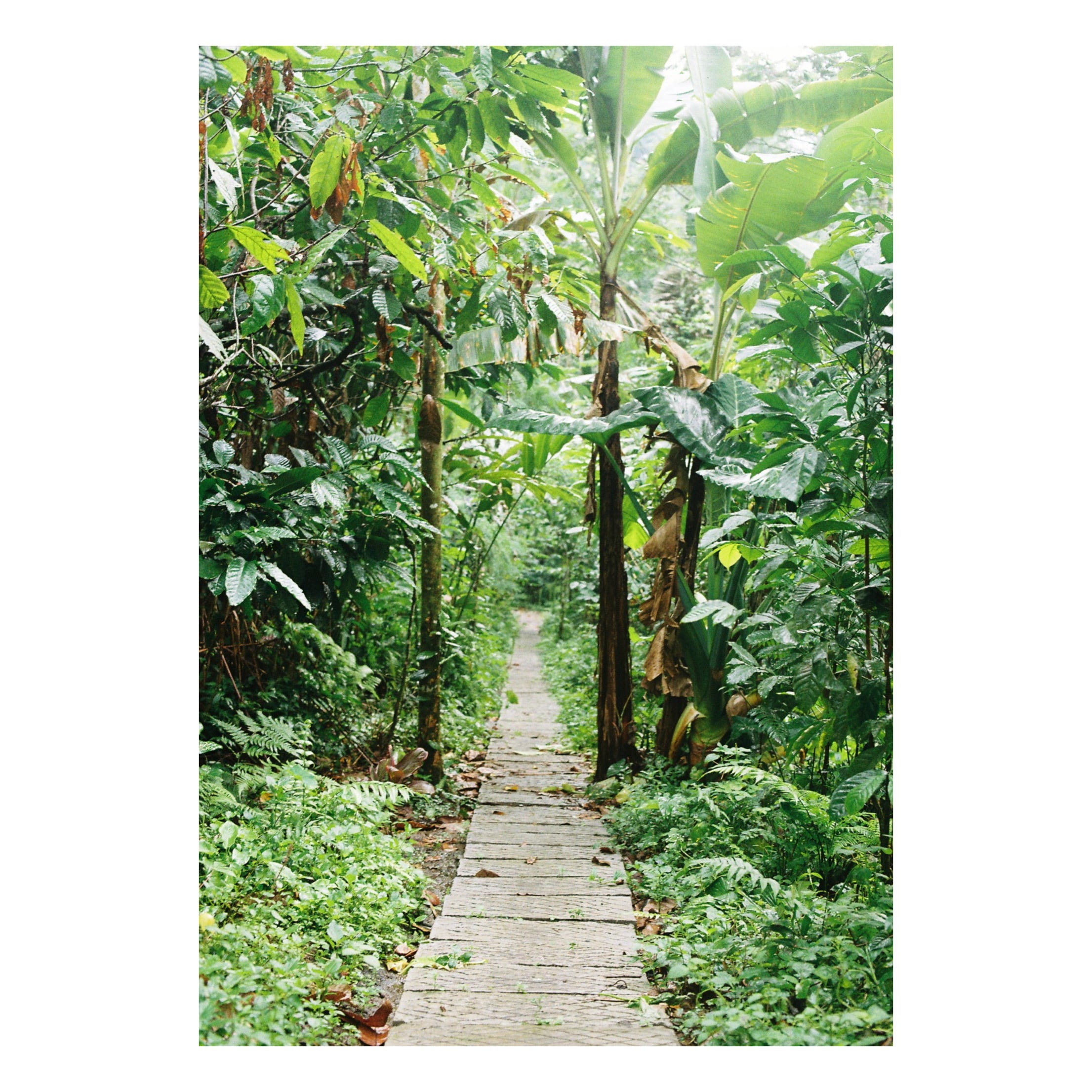
“Food forest” is a term I’ve heard before in the US but have only ever seen before in Hawaii. There’s food in every forest, to be sure, but a tropical climate allows for what I call the charismatic megaflora to flourish: the coconut, the pineapples, the coffee and cacao trees. That’s in addition to the edible plants that don’t get exported as much, like snakebeans and wild eggplant. Here in the highlands of the island, on one of the bottom slopes of a sacred volcano called Gunung Batukaru, Made has started teaching foraging and cooking classes on a friend’s land.
Spend five minutes with Made Masak and it becomes obvious she has all the qualities of a great chef: an excitement and curiousity about what’s around here, a boundless energy to learn and share, a deep sense of confidence in herself. And she is a chef, it’s just that this open-air, rustic kitcen in the highlands isn’t what most visitors to the island tend to associate with world-class cooking. In fact, Made has a background in fine dining, having worked at the esteemed dessert bar Room 4 Dessert in Ubud, but seeing her island’s foodways disappearing prompted her to move up to this village to be an educator both for visitors and for locals.
This small village is largely made up of terraced plantings of heritage red rice, a food that’s fading quickly on the island. Already, the island has lost its yellow rice entirely, Sayu Komang tells me. She’s the president of Slow Food’s Bali chapter and is working tirelessly, like Made and many others, to preserve and promote what is left. She organizes an organic farmers market in Ubud on Saturdays that both residents and tourists alike have begun to frequent, and is traveling often to ensure Bali’s voice is heard on the international stage as well.
Agriculture has long been part of this island, but before that the food sources were the ever-abundant forests and the ocean, settings that require not simply taking as much as you can but creating something of a recipricol relationship. Often the act of harvesting itself can encourage future production from the plants, and even if not, some needs to be left for the animals and the soil. But truly, there’s no shortage of food in this forest. By the end of our short trek, we’ve collected shell ginger and snakefruit and pineapple and taro and palm sap and so much more.
I find myself wondering what we’re going to do with all of this and realize I have no clue. How is it that I’ve heard the word Bali thrown around more times than I can count in the past decade, but I know nothing of its food?
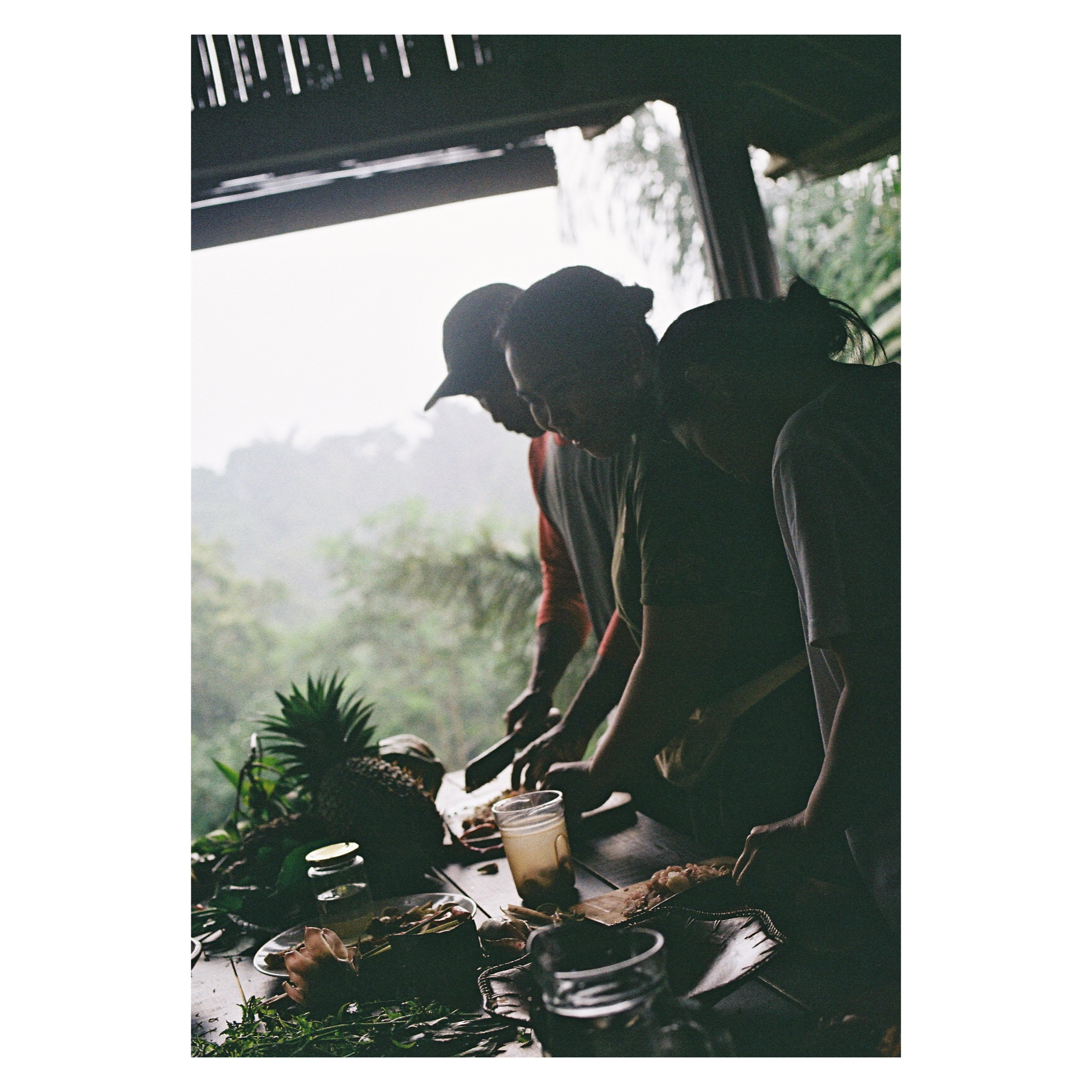
I’ve rarely seen Slow Food come together this quickly. It’s part of the nature of Balinese cuisine, from what I can tell: the humidity of tropical climates like these is often utilized to ferment and preserve ingredients, building up umami and depth up front, but the actual cooking is often dazzlingly fast. It’s how ingredients stay vibrant and fresh, for one, but it’s also a matter of practicality in a place where ovens have never been common.
But the reality here, cooking alongside Made and Sayu and their friends, is that it’s a community endeavor. A woman who has just emerged from a nearby house tends to the pot of simmering vegetables. A local journalist and Slow Food member has joined us and helps clean the ferns. A family shows up to watch and help out, and the father and I take turns chopping the turmeric and ginger we have just gathered. He then leads his kids in helping him stuff chopped chicken and aromatics in hollowed bamboo, and next to him the land owner has just built a fire. It takes me a second to realize what’s happening: a bit of water is poured in and the bamboo is then sealed; the chicken will be roasted and steamed simultaneously inside this bamboo when it’s laid on the fire.
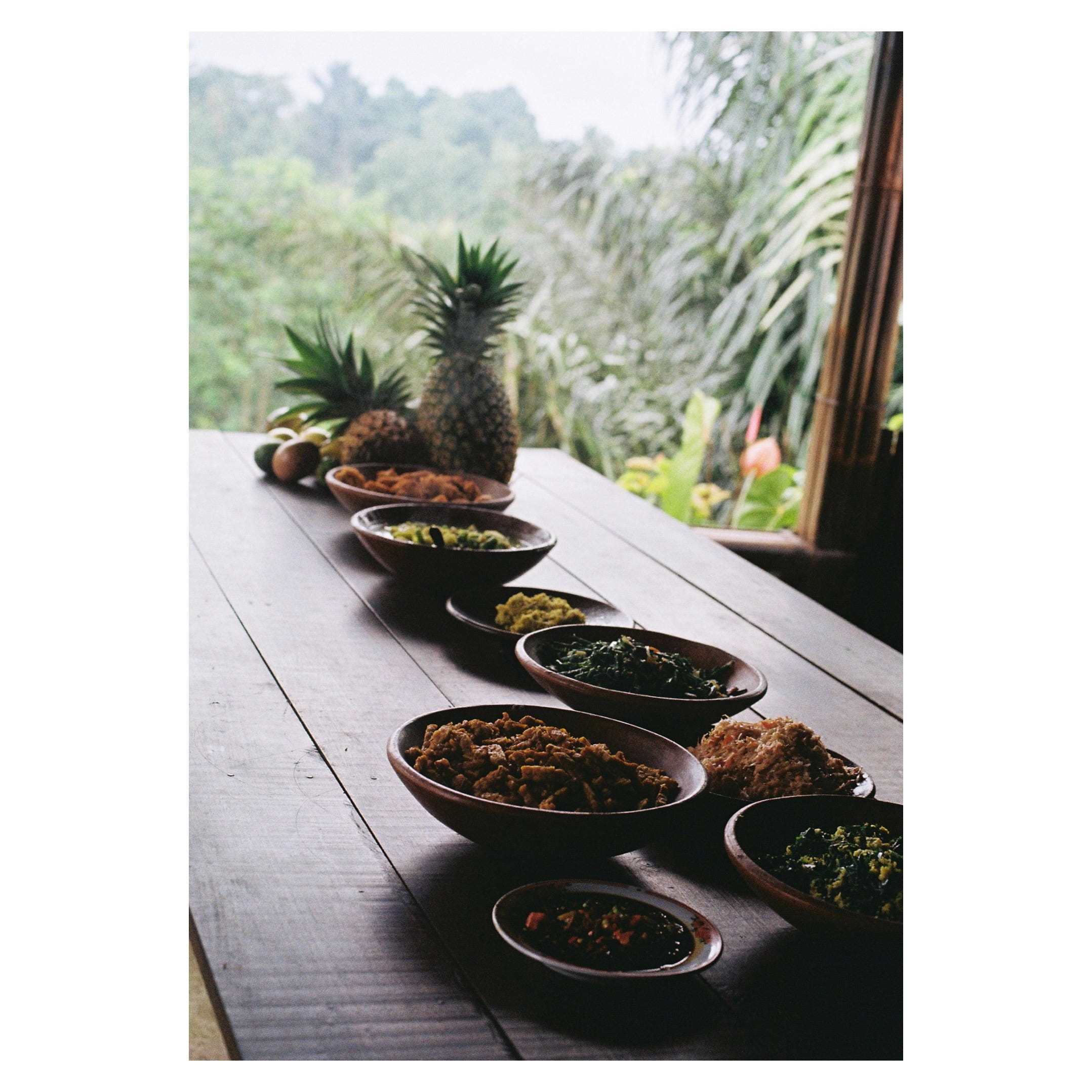
I turn around, enamored. A whole spread of dishes is starting to be laid out on the table. Fried taro, stir-fried ferns, Made’s homemade tempeh, a sambal of ginger and coconut, a green soup of beans and herbs and potatoes. And soon, the bamboo-cooked chicken. The two large bottles of beer I had brought as a little offering have somehow multiplied into 8. Where did all of this come from? As an alum of fine dining, Made has surely done a bit of prep beforehand, but the real story is that many hands make light work.
It is community, after all, that’s been at the core of this island forever. On our drive here we passed by small villages that dotted the hillside. In all of them there was a gathering of the elders in the street, in front of the altar, sitting and praying in their full Hindu attire. At temples we drive past on the way home, countless people had gathered to clean and purify the temple together, offering blessings for the new year to come. The wellness that’s promised to Westerners like myself when we visit rarely mentions this: instead, it is generally about individualized wellness, about healing yourself.
Made Masak’s lessons are about a deeper sort of healing, and there’s community in every aspect: being in communion with the plants around you, tending to collective land, sharing knowledge, cooking and eating together. It’s a small drop in the bucket of an island needing some large-scale healing, but through educating foreigners and locals alike her work ripples outward. She has dreams of opening similar projects around the island, on other land, teaching other communities about what’s growing in their forests, but at the moment she’s still settling in to life in this mountainside village. And for now, up here, in this small corner of Bali, there’s nothing but abundance.
~Want to take this food tour for yourself? Reach out to Made Masak on Instagram at @made.masak . If you are a paid subscriber and are looking for more recs for the island—a biodynamic coffee tour, or Sayu’s organic market, or restaurant recs—reach out and I’ll help how I can.
Thanks for writing about this treasure, and your travels. I will be there in June and will be reaching out to Made. Cannot wiat to try some forest food!
Loved learning about the food forest. I need to know what wild eggplant and snake fruit are!